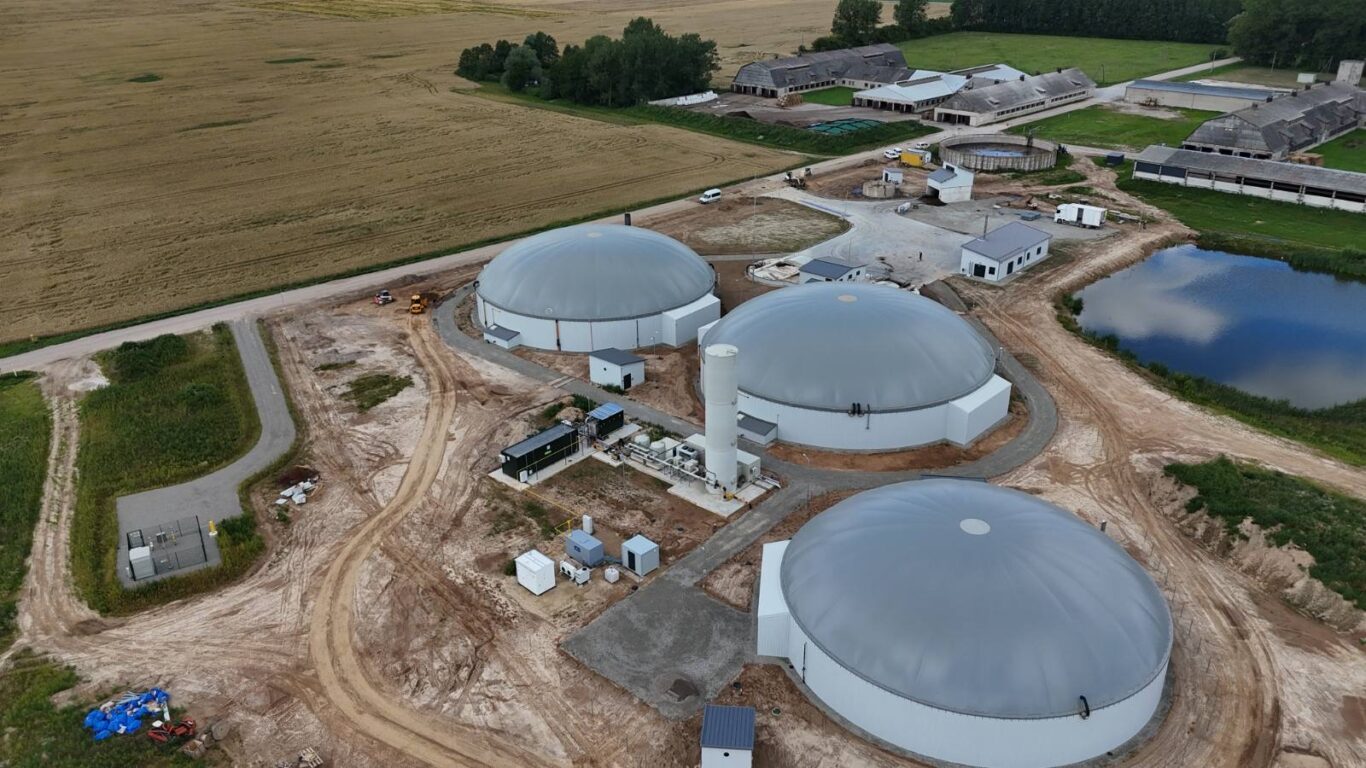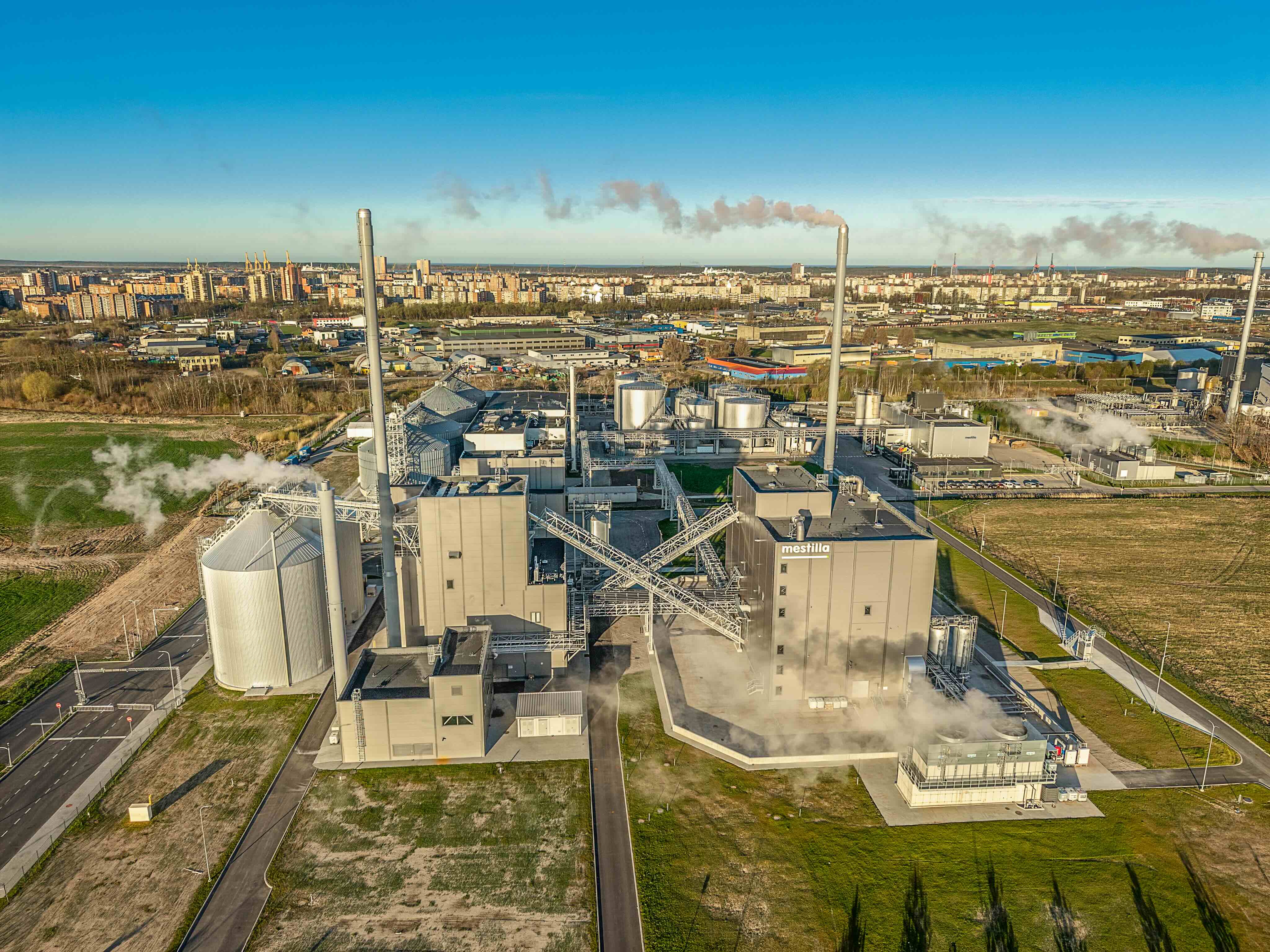
Lithuanian biodiesel and protein feed producer MESTILLA officially opened a new EUR 70 million rapeseed processing plant on Thursday in the Klaipėda Free Economic Zone. The new infrastructure will enable the company to process approximately half of Lithuania’s annual rapeseed harvest each year.
After two years of design and permitting work, followed by another 1.5 years of intensive construction, MESTILLA — operating in the Klaipėda FEZ since 2005 — has entered a new chapter in its history. According to the company, the project brought together around 50 contractors and 500 workers simultaneously, was completed at a record pace and delivered with week-level precision, while similar facilities in Europe typically take around five years to develop.
The new state-of-the-art facility will allow the company to process approximately three times more rapeseed than before. The plant’s annual capacity reaches up to 500,000 tonnes of rapeseed, from which 300,000 tonnes of high-value protein feed and 200,000 tonnes of biodiesel will be produced.
According to Arūnas Zubas, CEO of MESTILLA, the new plant will create value for Lithuania across several strategic areas, including energy security, agriculture, high value-added manufacturing and exports, environmental sustainability, and beyond.
“Since we started operations two decades ago, Lithuania’s rapeseed harvest has grown approximately fivefold. From now on, we will be able to process around half of it, further strengthening long-term demand for rapeseed growers and the entire agricultural sector. Beyond the obvious reduction in petroleum product imports, our plant will also contribute to the country’s strategic energy resilience: in the event of a crisis, biodiesel produced by MESTILLA could cover up to 20% of Lithuania’s diesel demand,” said A. Zubas.
Lithuanian Minister of Agriculture Andrius Palionis emphasized that Lithuanian agriculture today is not only about food production, but also an important part of energy independence and a higher value-added economy.
“Investments such as MESTILLA’s new plant strengthen the competitiveness of local rapeseed growers, ensure long-term demand for farmers, and create greater value in Lithuania from locally grown raw materials. It is especially important that modern processing infrastructure allows our farmers’ production to be transformed into sustainable biofuels and protein feed, both of which are significant for the country’s energy security and livestock sector,” said A. Palionis.
Meanwhile, Lithuanian Vice Minister of Energy Airidas Daukšas noted that investments of this kind strengthen Lithuania’s energy resilience and contribute to greater use of local renewable energy resources.
“Biofuel production from locally grown raw materials not only reduces dependence on imported fossil fuels, but also creates high added value for the national economy, increases supply security, and contributes to the decarbonization of the transport sector. This is an important step toward Lithuania’s and the European Union’s long-term climate neutrality and energy security goals,” said A. Daukšas.
The new plant incorporates advanced oilseed processing technologies and solutions from Belgian industry leader Desmet. The facility and its engineering systems were designed by Sweco, construction works were managed by EIKA Development, while the overall project management and timely implementation were ensured by the MESTILLA project team.
The company also highlighted its success in managing rising project costs. Although the initial budget increased by approximately 15%, the company estimates that launching a similar project today would already require investments of around EUR 100 million due to stronger demand for construction works and higher market prices.
In addition to previously proven and newly implemented advanced odor management technologies, the new project also includes two 70-meter-high chimneys. These are expected to significantly improve the dispersion of residual odors and effectively resolve the issue.
MESTILLA is one of the largest biodiesel producers in the Baltic region, contributing to the strategic renewable energy and environmental footprint reduction goals of both Lithuania and the European Union. Currently, all diesel sold in Lithuania contains a 7% biodiesel blend, helping reduce the use of imported fossil fuels by partially replacing them with renewable local raw materials. Approximately two-thirds of the company’s production is exported.